



While the qualitative aspects of the slow neutron-capture process (s-process) are understood, its quantitative treatment in stellar evolution models remains a major source of uncertainty. Rotation’s role in stellar structure, mixing, and s-process nucleosynthesis is actively being researched, with recent studies showing it can significantly influence s-process yields, but the precise effects and uncertainties in these models still require further investigation. To study the impact of rotation on the s-process, we implemented an extended and flexible reaction network within the Geneva Stellar Evolution Code. Rotation exerts a dual influence: first, it modifies the stellar structure equations to include centrifugal forces, which provide structural support and consequently lower central temperatures but high densities. Second, rotation increases helium core size and central temperature, enhancing s-process efficiency. The emergence of shear instabilities represents a significant rotational effect impacting s-process nucleosynthesis. Rotationally driven mixing transports 12C beyond the core into proton-rich radiative zones. These regions enable efficient  reactions. Subsequent beta-decay
 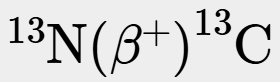 yields gradual 13C accumulation reaching mass fractions of ∼0.1%. Rotationally induced mixing returns portions of this 13C to the core, while outward core expansion slowly ingests additional 13C. Upon entering the convective region, 13C advects inward to higher-temperature zones, where rapid burning occurs via 13C(α, n)16O with abundant helium, producing neutrons. Therefore, rotationally induced mixing boosts s-process nucleosynthesis.
stars: rotation – nuclear reactions, nucleosynthesis, abundances – stars: evolution – stars: AGB and post-AGB
There are currently no refbacks.

It accepts original submissions from all over the world and is internationally published and distributed by IOP