


The chromosphere is a complex solar atmosphere that hosts a variety of transients and transports significant free energy to heat the corona. However, due to the limited sensitivity of polarization measurement and the influence of spectral line broadening, the basic magnetic field configuration in the chromosphere has not yet been fully revealed to correspond to the observed phenomena. In this work, we investigated the validity and application of the magnetic field inversion method for the Hβ 4861 Å spectral line with non-local thermodynamic equilibrium (non-LTE) approximations. The formation height of the Hβ line center in the chromosphere is 1100–1300 km (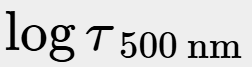 = [−4.86, −5.00]) in quiet Sun (QS) and 300—410 km (= [−2.41, −4.57]) in sunspots. We generated synthetic spectra by incorporating magnetic fields into semi-empirical Fontenla-Avrett-Loeser (FAL) models for QS and sunspots, and then performed inversions to obtain the magnetic fields, which were then compared with the magnetic fields in the models. In addition, we evaluated the accuracy of the magnetic fields obtained using the weak-field approximation (WFA) and the impact of using these WFA results as the initial guess model for non-LTE inversion on the final results. Our work validates the effectiveness of the inversion method for the measurement of line-of-sight (LOS) magnetic field components, which significantly improved the accuracy in both weak field (0—500 G) and strong field (>2000 G) regions, while maintaining accuracy in the intermediate field range of 500—2000 G. This demonstrates that the inversion techniques we employed are capable of resolving Zeeman-sensitive spectral lines in the chromosphere, which can be applied to the Hβ observational data from the new generation Solar Full-disk Multi-layer Magnetograph at GanYu Solar Station to provide full disk chromospheric magnetic field information.
Sun: chromosphere– Sun: magnetic fields– (Sun:) sunspots– polarization– techniques: polarimetric
There are currently no refbacks.

It accepts original submissions from all over the world and is internationally published and distributed by IOP