


We study the dependence of conditional stellar mass functions (CSMFs) on the cosmic-web environment using the TNG50 cosmological hydrodynamical simulation at z = 0. By classifying host haloes into voids, sheets, filaments, and knots, we examine satellite and central galaxy populations over the host-mass range resolved in TNG50. Satellite CSMFs show systematic environment-dependent variations, with the clearest differences emerging at the faint end. In a representative low-mass host regime (
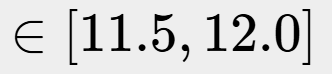 ), the satellite faint-end slope is shallower in filaments (α ≃ –0.38) than in sheets (α ≃ –0.48), suggestive of a balance between anisotropic supply along filaments and subsequent environmental processing. For central galaxies, we observe a crossover-like trend in dwarf-scale hosts (
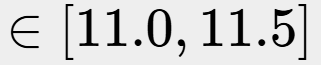 ): knots and filaments exhibit a more extended high-M⋆ tail, whereas voids and sheets host a higher fraction of low-mass centrals. Overall, our results suggest that the cosmic web environment imprints secondary, mass-dependent modulations on galaxy stellar mass distributions beyond halo mass alone, most clearly for faint satellites.
(cosmology:) large-scale structure of universe– galaxies: luminosity function, mass function hydrodynamics– galaxies: statistics
There are currently no refbacks.

It accepts original submissions from all over the world and is internationally published and distributed by IOP