


We present the seismic modeling of three solar-like stars (KIC 12069424 (16 Cyg A), KIC 6106415 (Perky), and KIC 10963065 (Rudy)) observed for longer than 12 months during the first short run of the Kepler mission. Our goal is to investigate acoustic glitches in their oscillation spectra and assess the physics they reveal. The three stars were selected for their similar fundamental properties such as the mass, radius, effective temperature, and asteroseismic indices (i.e., Δ, νmax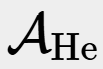 , which suggests a potential connection with stellar metallicity. The three stars have nearly identical masses, but 16 Cyg A appears older, while Perky and Rudy share similar age and composition, suggesting they may be solar sisters. In contrast, 16 Cyg A has a distinct evolutionary history. We also find degeneracy when using the initial hydrogen abundance (X0) and mixing length parameter (αMLT) simultaneously as free parameters in the seismic modeling, which can lead to potentially unreliable results. Our findings indicate that the αMLT parameter does not influence the observables of these solar-like stars. Finally, the inclusion of diffusion is essential for accurately reproducing observed stellar properties, particularly the surface metallicity of these solar-like stars, which are slightly hotter than the Sun, with temperatures between 5800 and 6100 K, where diffusion remains a critical process.
stars: evolution– stars: interiors– stars: oscillations (including pulsations)– stars: individual (KIC 12069424, KIC 6106415, KIC 10963065)
There are currently no refbacks.

It accepts original submissions from all over the world and is internationally published and distributed by IOP