


The Hubble tension refers to the significant discrepancy in the Hubble constant H0 obtained from two different measurement methods in cosmology which has persisted for decades. To theoretically explore potential solutions to this problem, this paper examines a model within the framework of Einstein–Cartan theory, where torsion is introduced with spin as the corresponding entity, allowing for a linear assumption between H and ϕ. By employing the Markov Chain Monte Carlo algorithm and utilizing Cosmic Chronometers data, we impose parameter constraints on various parameters in the Friedmann equations, particularly focusing on the curvature density parameter Ωk, to assess whether the model remains stable under this assumption and whether the estimated parameters align more closely with either of the observational results. In conclusion, we find that the parameter constraints in the model incorporating torsion (
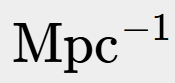 , obtained under the Big Bang Nucleosynthesis constraint with Ωk = 0;
  , obtained under the same constraint but set Ωk as a free variable;
  , obtained under the Planck constraint) are more consistent with the value derived from CMB data, favoring a lower H0 value.
(cosmology:) cosmological parameters – (cosmology:) dark matter – methods: data analysis
There are currently no refbacks.

It accepts original submissions from all over the world and is internationally published and distributed by IOP