



The Galactic Bulge, as the center of the Galaxy, is the closest laboratory for studying galaxy formation and evolution. However, its study faces significant challenges due to heavy dust extinction. This paper is devoted to deriving the average age of the Galactic Bulge and investigating its spatial distribution. We utilize a high-precision PSF-fitting photometric catalogue in the J and Ks bands observed by VISTA to study the average stellar ages within the Bulge. Red giant stars are employed as tracers, with their average distances determined using red clump stars as references. The average ages are fitted with stellar models. Our analysis reveals a systematic age gradient across the Galactic Bulge (2° < ∣b∣ < 8°). The mean stellar age increases significantly with galactic latitude, shifting from a younger population (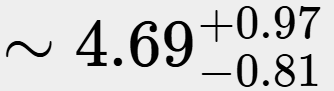 Gyr) prevalent near the plane to a predominantly older population (
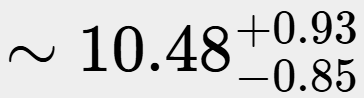 Gyr) at higher latitudes. We hypothesize that the young stellar population at low latitudes is predominantly composed of a pseudo-bulge formed via disk/bar processes (incorporating contributions from recent star-forming activity in the Galactic center), whereas the older stellar population is associated with spheroidal bulges generated through early-stage collapse or accretion of debris from merged dwarf galaxies.
Galaxy: bulge– Galaxy: stellar content– Galaxy: formation– Galaxy: evolution
There are currently no refbacks.

It accepts original submissions from all over the world and is internationally published and distributed by IOP