
We report the discovery of an extremely metal-poor galaxy at a redshift of z = 3.654, identified through infrared spectroscopy using the James Webb Space Telescope (JWST). This galaxy, CAPERS-39810, exhibits a metallicity of 
 , indicative of its primitive chemical composition, resembling the early stages of galaxy formation in the Universe. We use JWST NIRSpec/MSA for spectroscopic analysis, complemented by photometric data from the COSMOS2025 catalog. Our analysis employs the R3 strong-line diagnostic method to estimate metallicity, due to the lack of auroral lines in the spectrum. The galaxy’s emission lines, including Hβ, [O iii], Hα and He i, are clearly detected. The rest-frame equivalent widths of the strong hydrogen recombination lines are EW0(Hβ) = 184 ± 48 Å and EW0(Hα) = 1144 ± 48 Å. Furthermore, we perform detailed spectral energy distribution modeling to derive a galaxy logarithmic stellar mass of
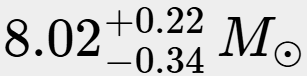 . This discovery adds to the growing body of evidence for the existence of very low-metallicity galaxies existing at cosmic noon of z ≈ 3, which are crucial for understanding the processes of chemical enrichment and star formation in young galaxies at the cosmic noon.
galaxies: general – galaxies: high-redshift – galaxies: abundances – galaxies: star formation
There are currently no refbacks.

It accepts original submissions from all over the world and is internationally published and distributed by IOP