



In the Gaia era, a comprehensive analysis of the binary open clusters (BOCs) NGC 869 (h Persei) and NGC 884 (χ Persei) system has been conducted to investigate its structural, astrophysical, kinematic, and Galactic orbital properties, along with its dynamical evolution. By applying the UPMASK algorithm to Gaia astrometric data for the estimation of cluster membership probabilities, it has been determined that 808 stars in NGC 869 and 707 stars in NGC 884 exhibit the highest statistical likelihood of being cluster members. The fundamental astrophysical parameters of the clusters were inferred within a Bayesian framework using Gaia data and PARSEC stellar evolutionary isochrones, through the application of the Markov Chain Monte Carlo (MCMC) technique. The estimated parameters are: color excess  mag and
 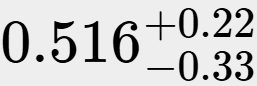 mag, distances
 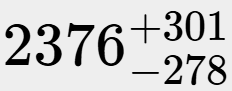 and
and 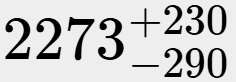 pc, ages
  and
and  , and metallicities [Fe/H] = −0.24 ± 0.12 and [Fe/H] = −0.25 ± 0.12 dex for NGC 869 and NGC 884, respectively Since spectroscopic observations are not available for the clusters, spectral energy distribution analysis was employed for the member stars, yielding results consistent with those obtained using the MCMC method. Kinematic and Galactic orbital analyses suggest that the open clusters originated in nearby regions of the Galaxy. This interpretation is supported by their similar space velocities and Galactic orbital parameters. Furthermore, orbital integration over 1 Gyr indicates a potential interaction between the clusters within the next 11 Myr. This study provides strong evidence of a common origin and a possible future dynamical interaction, contributing valuable insights into the formation and evolution of BOCs in the Milky Way.
(Galaxy:) open clusters and associations: individual (NGC 869, NGC 884) – (stars:) Hertzsprung Russell and C–M diagrams – Galaxy: kinematics and dynamics
There are currently no refbacks.

It accepts original submissions from all over the world and is internationally published and distributed by IOP